Clearly, I’ve entered into my butterscotch period. I saw this chocolate bar on an endcap at TJ’s and scooped it right up.
Today’s review is of Trader Joe’s Milk and Dark Chocolate Butterscotch Bits Bar. Not the shortest candy bar name in the world. This 3-ounce bar (serves 3) costs $1.79. It’s also made in England. Pip pip! Cheerio!
She said: I’m a fan of chocolate and butterscotch. 7-layer cookies are my jam. (Do people still say “my jam?”) The butterscotch does not come through in this bar, though. There’s a crunch, but no butterscotch flavor. As for the milk and dark chocolate…I think this would be better with one or the other. As it is, this is a good chocolate bar, but not what I was expecting from the name. Overall rating: 3 of 5 stars
He says (Jack): Personally, this was no more than a chocolate bar. Although I could tell there were “bits” of something in it, they did not have a distinct taste. Even knowing it was butterscotch and trying to taste it, I couldn’t find it. That being said, the chocolate part was great, and I love the look of the clearly separated milk and dark chocolate. All in all, though, not very special… Overall rating: 2.5 out of 5 stars
[note: We have no affiliation with Trader Joe’s. I’m sure they have never read this blog and have no idea who we are. Hey, we like being incognito, although we never wear sunglasses indoors. ;)]
Have a nosh and have a listen! I sit down with the team at the hit podcast “Unorthodox,” to talk about Jewish stuff, The Cooking Gene and all things food in between. I also give a few hints about what my next project, Kosher Soul is all about. I hope you enjoy. Happy National Soul Food Month!
You may have heard that soaking grains helps increase mineral absorption and enhance digestibility. Here’s what’s really going on.
Whole grains are wholesome and nutritious foods for most people. People who eat whole grains tend to live longer, too (source). And some of the longest lived peoples in the world consume diets rich in whole grains (source, source).
But most of those long-lived people aren’t just eating bran flakes and pre-sliced whole grain sandwich bread; rather, they’re eating minimally processed whole grains prepared in ways that maximize their nutritional value. In many culinary traditions throughout the world, grains are carefully prepared by soaking, fermentation or sourdough leavening. And while many cultures do traditionally soak or ferment their grains, the practice is not necessarily universal.
What are the benefits of soaking grains?
Grains are a good source of complex carbohydrates, dietary fiber, and they contain B vitamins like niacin and B6. They also contain minerals like calcium, iron, phosphorus, potassium and zinc.
But here’s the catch: Compounds that occur naturally in grains can make them difficult to digest and make their minerals difficult to absorb. And for some people, especially those with compromised digestion, those complex carbohydrates can send them into fits of pain, bloating and digestive distress. Soaking whole grains helps to reduce these compounds, resulting in increased mineral availability and much easier digestion.
Soaking grains also release compounds called lower order inositols – specifically myo- and d-chiro-inositol. And these compounds help support blood sugar regulation, metabolic and hormonal health.
Enhanced Mineral Absorption
When you soak whole grains in warm water overnight, you activate the enzyme phytase. This enzyme then works to break down phytic acid which binds minerals like iron, calcium and zinc. As phytase does its magic, it release minerals in whole grains and makes them easier for your body to absorb (source).
Soaking is also the first step in sprouting grains. Sprouting grains tends to release even more minerals than soaking alone (source).
Most people who eat an otherwise nutritious diet inclusive of meat, fish and vegetables will consume the minerals their bodies need; however, if you’re concerned about your mineral intake, soaking or sprouting your grains can be a good strategy.
Enhanced Digestion
In addition to activating the enzyme phytase, soaking your grains also activates the enzyme amylase which breaks down complex starches found in grains. These complex starches can make grains difficult for some people to digest.
When those starches are broken down by soaking, sprouting or sour leavening followed by cooking, the grains tend to be a little easier on your digestion. This is also why sourdough bread tends to be easier to digest than quick-rise whole wheat bread, and why it’s permitted on a low-FODMAPs diet, particularly when it’s made from ancient grains like spelt (source).
Increase in Micronutrients that Support Blood Sugar Regulation and Hormonal Balance
When enzymes break down phytic acid, the compound that makes the minerals in grains difficult to absorb, they not only enhance the availability of minerals, but they also convert phytic acid into lower order inositols – and myo-inositol specifically.
These micronutrients help to support blood sugar balance, metabolic and hormonal health. These lower order inositols have a particularly dramatic effect on the hormonal health and fertility of women with polycystic ovarian syndrome (PCOS) (source, source, source) and are often used therapeutically as supplements to support fertility, hormonal health and blood sugar regulation.
Myo-inositol supports blood sugar regulation, and can be helpful in the management of type 2 diabetes (source). Animal studies have found that these inositols which are present in soaked and sprouted grains may help to return insulin sensitivity to those who are insulin resistant (source), so they’re particularly powerful micronutrients.
What are the drawbacks of soaking grains?
Soaking grains improves mineral availability, makes grains easier to digest and increases compounds that help support metabolic health, there’s a few drawbacks. Namely, soaking grains can be tedious, and is generally less effective than sprouting or sourdough fermentation.
While soaking grains, especially for porridge and gruel, is a traditional culinary practice throughout the world, not all traditional peoples soaked their grains. The practice isn’t mentioned in Nutrition and Physical Degeneration, a landmark book that evaluates the traditional diets of pre-industrial people throughout the world.
Soaking grains can be tedious.
Planning ahead and soaking grains in advance is easy and takes very little time; however, it can feel tedious until it the practice becomes routine. If you want the benefits of soaking, but have trouble remembering or advanced planning, you can purchase sprouted grains and sprouted flour at many natural foods markets as well as online, and sourdough bread is readily available in most areas.
You’re probably getting enough minerals already.
If you’re eating an otherwise nutrient-dense diet that’s rich in minerals from meat, fish, and vegetables, you probably don’t need to worry about soaking your grains. The mineral-binding effects of food phytate can contribute to mineral deficiencies, but this is generally only a concern in developing nations where people may rely only on grains and pulses with very little access to other mineral-rich whole foods. It might also be a concern for people who adhere to vegan and vegetarian diets, and who must rely heavily on grains and pulses due to the absence of meat, fish, eggs and milk.
If you eat plenty of mineral-rich foods, soaking grains likely won’t contribute a significant amount of additional minerals to your diet. Of course, you might still benefit from eating soaked or sprouted grains because they’re also easier to digest.
Some people benefit from mineral-binding effects of phytate.
Some people, particularly those of Irish descent, are genetically predisposed to iron overload and a condition called hemachromatosis. While avoiding iron-rich foods like organ meats or clams is a primary strategy, the iron-binding effects of whole grains prepared without any special treatment could be valuable.
Phytic acid is a powerful antioxidant.
While we often call phytic acid an anti-nutrient because it binds minerals, it is also a powerful antioxidant precisely because it does bind minerals. More specifically, it binds iron.
Your body needs iron and iron performs many vital functions within your body. But, it can also contribute to free radical formation when the way your body regulates iron is disrupted (source). Because phytic acid found in whole grains binds iron and prevents you from fully absorbing the iron in grains, it can act as an antioxidant (source) and researchers are examining the therapeutic role it might play in colon and other cancers (source).
Not only does phytic acid bind minerals, but it also binds heavy metals in the gut (source), thus potentially helping to minimize their accumulation in the body.
Should you soak grains or not?
There’s both benefits and drawbacks to soaking grains. And it can be difficult to decide if it’s a technique that’s worth your time.
Remember that in an otherwise nutrient-dense, omnivorous diet, the mineral-binding capacity of phytic acid is unlikely to contribute to mineral deficiency. If you find that you have trouble digesting whole grains, you might try soaked or sprouted grains or sour-leavened breads to see if you feel better when you eat them.
If you’re prone to iron overload or exposed to heavy metals, you might consider eating whole grains for their phytic acid content, and doing so without any advanced or special treatment like soaking or sprouting.
If you enjoy the process of soaking or sprouting grains, then you should continue doing just that.
How do you soak grains?
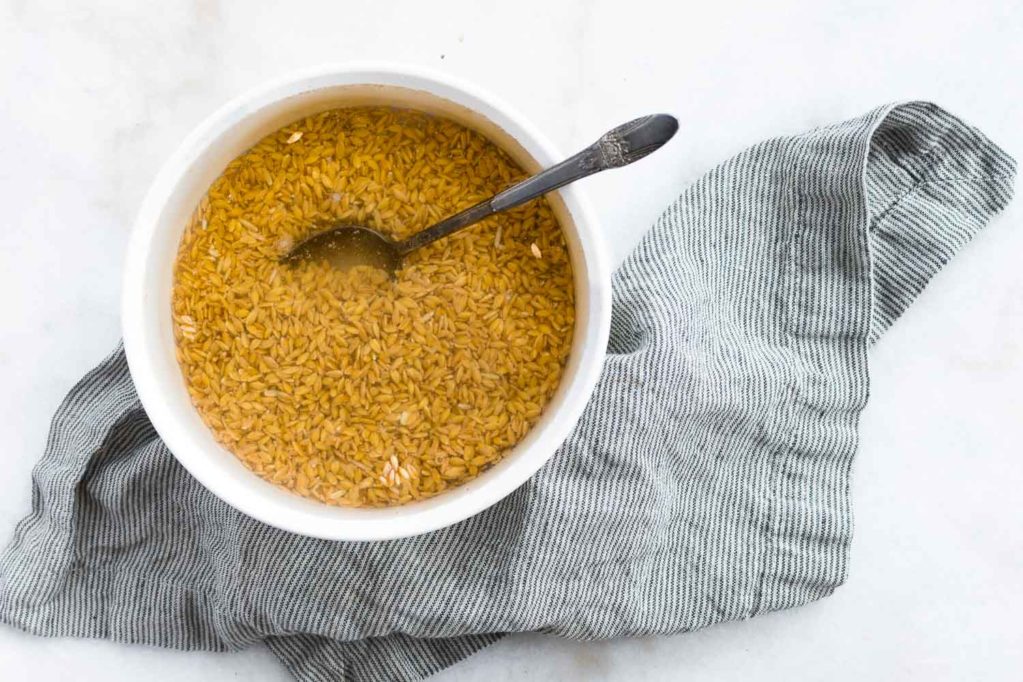
To soak your grains, you should place them in a mixing bowl, cover them with hot water and let them rest at least eight and up to 48 hours. Most recipes call for soaking overnight.
You can also add an acidic ingredient, like lemon juice, vinegar or sourdough starter, to the soak water to facilitate the release of phytase and the break down of phytic acid. While the use of whey from yogurt or kefir was popularized by Nourishing Traditions, dairy will not facilitate the release of minerals in the same way as a non-dairy acidic ingredient will and so is counterproductive and ineffective.
Grains that are naturally low in phytase, like brown rice or oats, may benefit from sprouting or from the addition of a phytase-rich ingredient like ground rye.
Grinding or cracking grains before soaking them will also help to facilitate the break down of phytic acid.
How to Soak Grains
Soaking Whole, Cracked or Rolled Grains: To soak grains in their whole, cracked or rolled form, you’ll need to place them in a bowl and cover them with hot water at approximately 140 F. If you like, stir in one tablespoon acid like vinegar, lemon juice or sourdough starter per 1 cup grains.
Soaking Flour. Baking with soaked flour can be tricky. It’s best to use a sourdough recipe or to use sprouted grains because they don’t need to be soaked. You can also mix the liquid ingredients of your recipe together with your flour, cover them well, and leave the batter at room temperature overnight as in this recipe for Milk and Honey Sandwich Bread.
Soaked Grain Recipes
If you’re looking for soaked grain recipes, check out the cookbook The Nourished Kitchen which includes more information about soaking grains. Or check out the recipes below:
Soaked Oatmeal Porridge is super simple to make and cooks up in about five minutes in the morning.
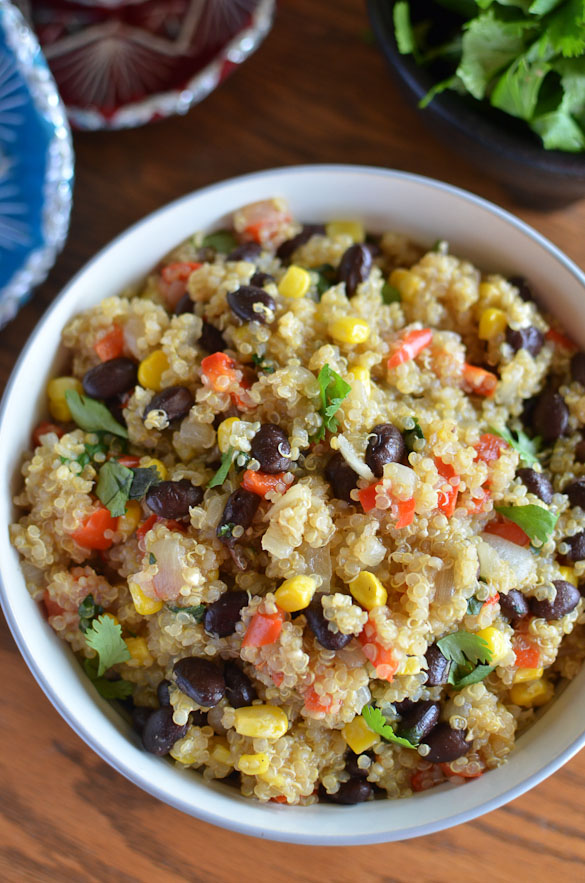
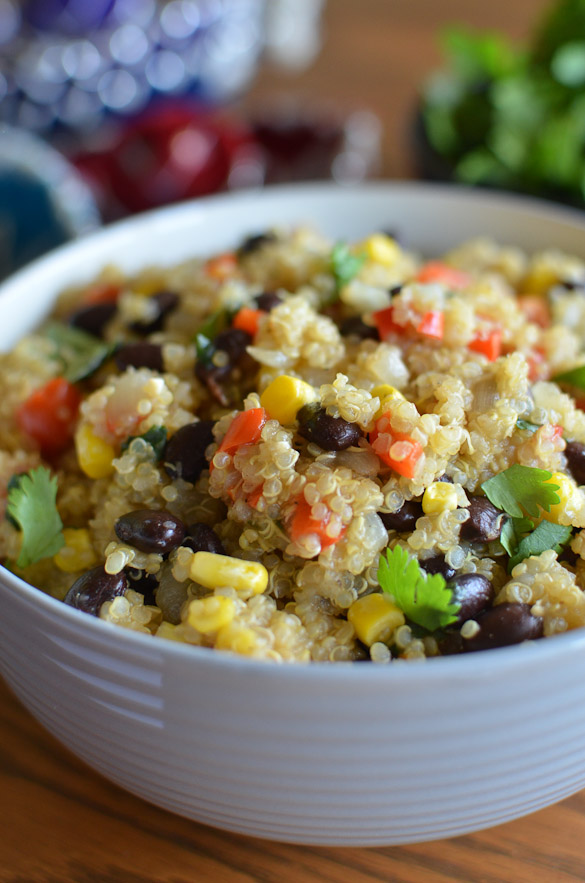
This Southwest Black Bean Quinoa is the perfect Tex-Mex side dish easily prepared for serving warm or as a cold salad. Use in taco bowls or a side dish for tacos!
I first had this Southwest Black Bean Quinoa over Thanksgiving week a few years ago while I was visiting friends and family in the Midwest. My friend, Cara, introduced it to me. She told me how much she liked the flavors and I couldn’t wait to try it.
There was no doubt in my mind that Ben would like it, too. I was also excited to add another healthy side dish to our collection. I served it as a warm side dish, similar to rice, and he enjoyed it. The next day, I served it as a cold salad. It was excellent.
Another way to serve this is as a bed to slices of grilled chicken with fruit on the side. This makes for a very healthy lunch or dinner, and you feel really good afterwards. Although, without the chicken, you can also enjoy this as a vegetarian meal. Lately, however, we have enjoyed as a base for taco bowls (or as a side to tacos) with my favorite Slow Cooker Beef Barbacoa. This combination is a good one to share as a meal for new moms, too!
Ingredients
1teaspoonvegetable oil
1onionchopped
1red bell pepperdiced
3clovesgarlicpeeled and chopped
3/4cupuncooked quinoa
1 1/2cupsvegetable broth
1teaspoonground cumin
1/4teaspooncayenne pepper
salt and pepper to taste
1cupfrozen corn kernels
115 ounce can black beans, rinsed and drained
1/2cupchopped fresh cilantro
Instructions
Heat the oil in a medium saucepan over medium heat. Add the onion and pepper, and saute until lightly browned. Mix in the garlic and heat until fragrant, about 30 seconds. Stir in the quinoa, then pour in the vegetable broth. Season with cumin, cayenne pepper, salt, and pepper. Cover, reduce heat to low, and simmer for 20 minutes.
Stir in the frozen corn and continue to simmer about 5 more minutes, until heated through. Remove from the heat and stir in the black beans and cilantro. Serve warm or cold.
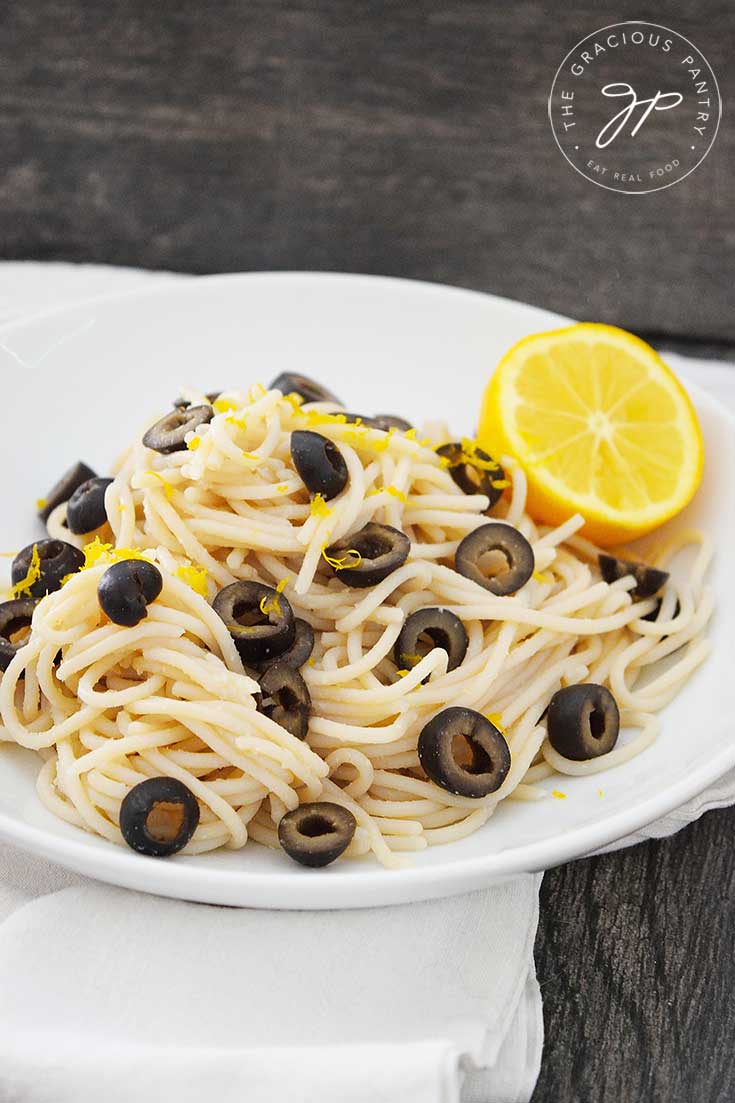
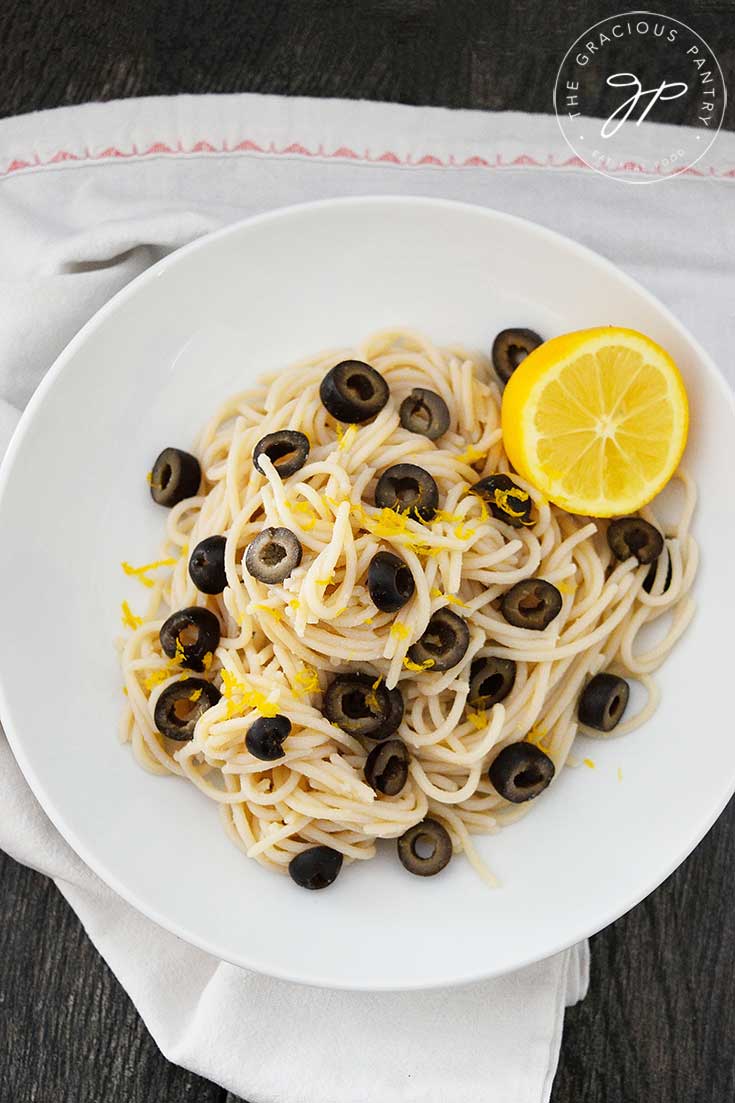
This clean eating olive pasta is so crazy simple to make and totally hits the spot!
We all have those days where we go crazy trying to get it all done. Days where there is no way on earth we are going to tick off every item on our to-do list. Days where you just want to throw in the towel and make your way to the drive-thru. I’ve been there.
Mini Chef and I are preparing to move once again (long story), and I have more on my plate (pardon the pun) then I know what to do with at the moment. So I need simple dinners that I can get on the table fast. Mini Chef and I both love olives, so this dish was sort of a no-brainer. I used what I had on hand that was quick and easy, and we totally enjoyed our meal!
THE RECIPE:
This simple dish is super easy to make with easy-to-find ingredients. The flavors are fresh and simple, but they come together wonderfully to provide you with a delicious and very satisfying meal. This pasta dish can be served warm or cold, and is great served cooled on a hot summer day. But it’s truly wonderful any time of year.
WHAT TO SERVE THIS WITH:
A green salad
Chicken
Pork
All by itself!
Once your pasta is cooked, it will take you literally about five minutes to put this together. (Or however long it takes you to squeeze a lemon and open a can of sliced olives.) It’s super simple, super fast, and offers a tangy, salty flavor that only olives can provide.
THE OLIVES:
You can certainly use any type of olives you prefer. But air on the side of caution because if you use an olive that is super tangy already, then the lemon juice will be overkill. Black olives offer a nice balance without overdoing it on the puckery tang.
THE PASTA:
You can really use any type of pasta you prefer here. I used a gluten-free, brown rice spaghetti from Trader Joe’s. You can use regular, whole grain pasta too. However, if you use a gluten free pasta, be sure to stir frequently during cooking, and rinse the pasta when it’s done cooking. Those are the two main differences between cooking wheat-based pasta and gluten-free pasta. The stirring and the rinsing. With wheat-based pasta, you don’t have to stir or rinse. It’s actually better that way. But with gluten-free, you do.
SUBSCRIBE:
Remember to subscribe to my free, Gracious Pantry Newsletter to receive all my latest recipes in your inbox! Click here to sign up!
YOU MIGHT ALSO ENJOY THESE CLEAN EATING RECIPES:
Enjoy!
CLEAN EATING GARLIC LEMON OLIVE PASTA SALAD RECIPE:
Clean Eating Olive Pasta
A simple, flavorful pasta that comes together in under 5 minutes once the pasta is cooked!
Course: Main Course, Pasta
Cuisine: American
Yield: 2servings
Calories: 551kcal
Author: The Gracious Pantry
Ingredients
1/2lb.spaghetti pasta(cooked to package directions)
6oz.can sliced black olives(drained)
1mediumlemon(juice only)
1/2tsp.garlic powder(granules)
salt to taste
Instructions
Once your pasta is cooked to your liking, simply drain and return to pot.
Stir in all other ingredients, adjusting salt to taste as needed.
Serve with a lemon wedge for extra tang and flavor!
Recipe Notes
Please note that the nutrition data given here is a ballpark figure. Exact data is not possible.
Nutrition Facts
Clean Eating Olive Pasta
Amount Per Serving (0.5 the recipe)
Calories 551Calories from Fat 126
% Daily Value*
Total Fat 14g22%
Saturated Fat 2g10%
Sodium 1331mg55%
Potassium 288mg8%
Total Carbohydrates 89g30%
Dietary Fiber 6g24%
Sugars 3g
Protein 15g30%
Vitamin A6.7%
Vitamin C7%
Calcium6.8%
Iron10.5%
* Percent Daily Values are based on a 2000 calorie diet.
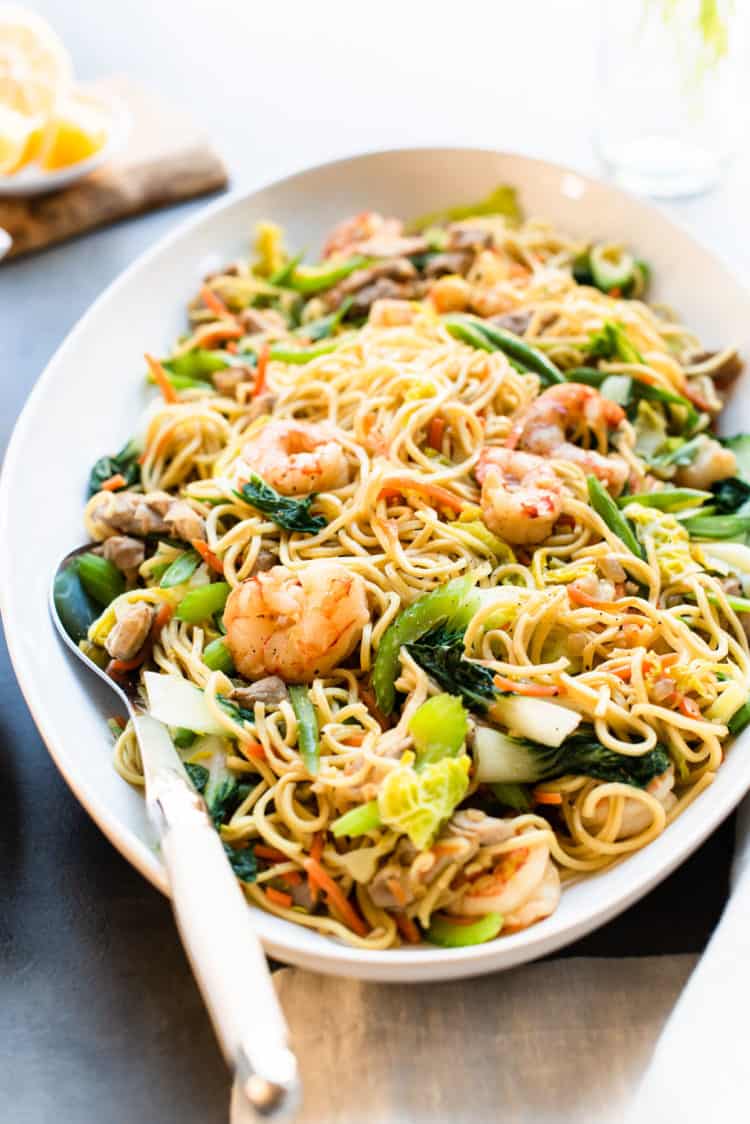
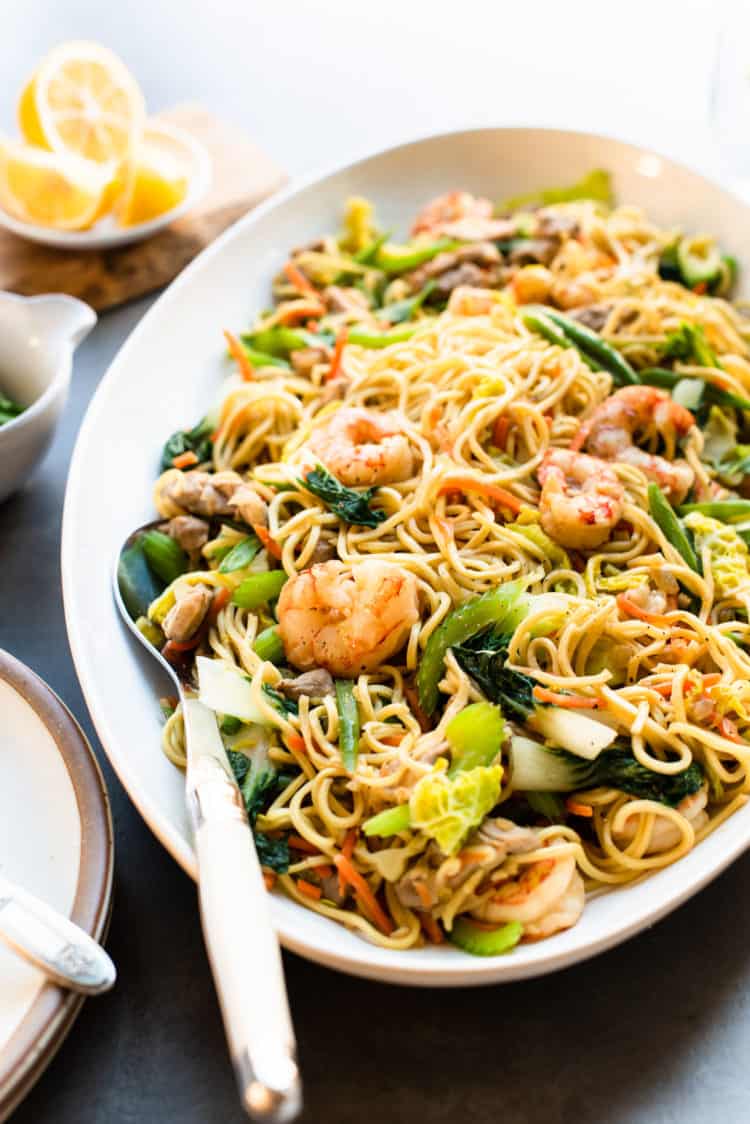
Noodles are a quintessential part of any Filipino gathering! Join me as I celebrate my blog’s 9th blog birthday with this easy recipe for Pancit Canton. It may be party ready, but it’s simple enough for a weeknight meal.
On January 31, 2010, this blog was born.
I had named it Kitchen Worthy, with the hopes of sharing anything that was worthy of being in the kitchen, and a few months into my blogging adventure, I had to rename my blog-baby. I’m not sure if you’ve been reading long enough to remember this…chances are you found me further along in the process…but if you’re curious about how and why I had to rename the blog, I tell the story on this podcast.
If you do remember, wow, we’ve been together a long time.
Nine years to today, in fact.
In these nine years, my goal is still to share with you anything worthy of being in the kitchen, whether it’s a recipe or a wine or a handy tip to make life easier, and I hope you’ve found a few things to make your life more delicious. I just want to take a minute to thank you for joining me on this journey. A lot can happen in nine years, and a lot certainly has! I’ve made wonderful friendships, traveled to amazingplaces, sipped lots of wine, met so many farmers, and cooked countless recipes.
Many of my own family favorites have become yours, too. I love when I hear that my mechado reminds me of the meat and potatoes dish your grandmother made, or that my father-in-law’s buttermilk banana bread has become your go-to recipe, too.
So when I celebrate nine years of writing Kitchen Confidante, I celebrate nine years of friendship with you. It is you I think of when I cook in my kitchen — I imagine you sitting in the chair at the kitchen island with me, chatting about what happened today, and sharing good food together. Without you, this blog would not be.
This calls for a celebration! A birthday is not complete without noodles in my family — I love this Filipino tradition of having pancit for long life! By now you know that Pancit Bihon is usually what I make for special occasions, but Pancit Canton is another party-staple of any Filipino fiesta. Between you and me, I think of Pancit Canton as perfect for a weeknight meal – it’s actually quite easy to make, and perfect for cleaning out your vegetable drawer — you can customize it however you like! Commonly made with chicken, pork and shrimp, you can easily make it pescatarian- or vegetarian-friendly, too.
So go grab a fork, and let’s dig into some noodles, shall we?
What is Pancit Canton?
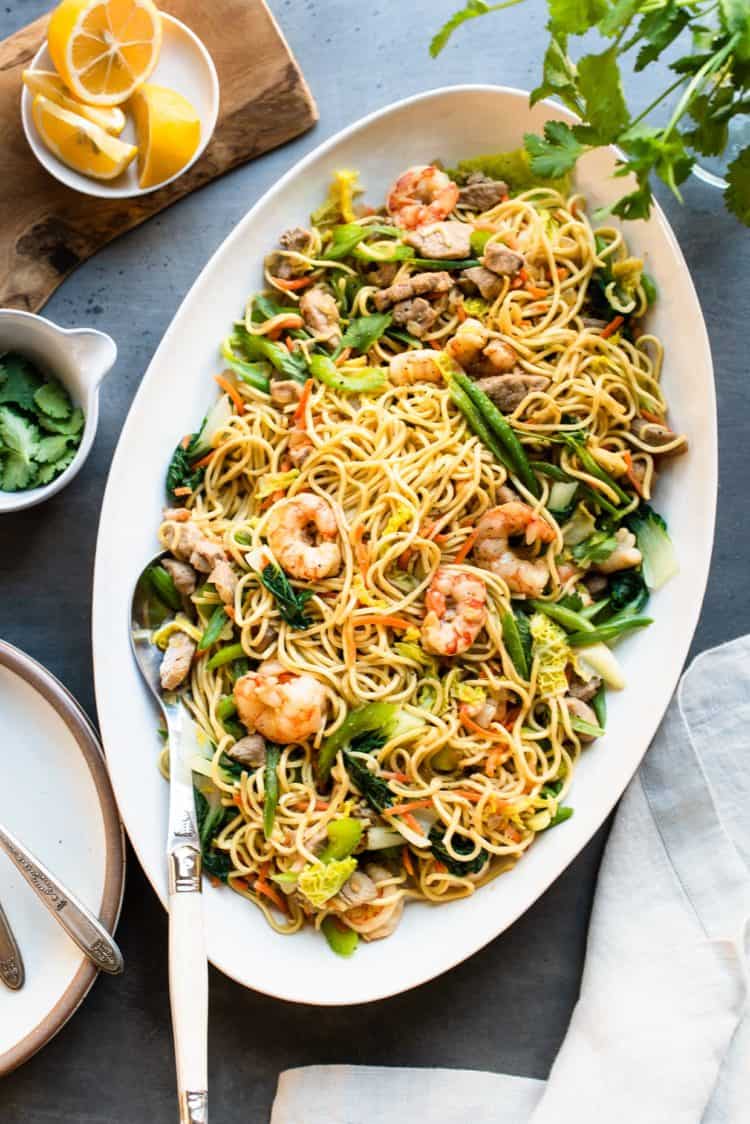
There are many popular noodle dishes in the Philippines, and Pancit Canton is a common stir-fry noodle that is most reminiscent of Chinese influence to Filipino-cuisine. Made with wheat flour noodles, Pancit Canton is often described as Filpino chow mein (more on that below), and the flavors are quite similar with its use of soy and broth to flavor the noodles and vegetables. Pancit Canton is often made with pork, chicken, and shrimp, and a variety of vegetables, and depending on who makes it, it may also include chicken liver and Chinese sausage (which I have omitted here).
Is Pancit Canton the same as Chow Mein or Lo Mein?
Pancit Canton is often described as a cousin to Chow Mein and Lo Mein, which is a stir-fry noodle dish that many of us who love Chinese food grew up eating. They are definitely quite similar, however, there are a few main differences.
One is in the noodle itself. Chow mein noodles are egg noodles, whereas Pancit Canton noodles are wheat flour noodles, though depending on the brand of pancit canton noodles you purchase, some contain egg powder. I prefer the plain wheat flour noodles for its bite and texture.
The other main difference is in the preparation. When making Pancit Canton, the dry noodles are added to the broth towards the end of the dish, and no pre-boiling is necessary. With chow mein and lo mein, the noodles are boiled (or fried) and drained first (like making spaghetti), then added to the stir-fry after.
Where Do I Buy Pancit Canton Noodles?
If you have an Asian market such as 99 Ranch near you, you can easily find Pancit Canton Noodles in the noodle aisle. It will be labeled as “pancit canton noodles: flour noodles.” You can also find Pancit Canton Noodles on Amazon. See the recipe below for substitution recommendations.
Disclosure: There are affiliate links in the post, see my Disclosure page to learn more.
Pancit Canton (Filipino Stir-Fried Noodles)
Pancit Canton is a party staple in the Philippines! These Filipino Stir-Fried Noodles are a close cousin to chow mein, and while it’s fiesta ready, it’s easy enough to make for a delicious weeknight dinner.
Course Dessert, Main Course
Cuisine Filipino
Keyword Filipino, noodles, Philippines, stir-fry
Prep Time 15minutes
Cook Time 30minutes
Total Time 45minutes
Servings 8servings
Calories 228kcal
Author Liren Baker
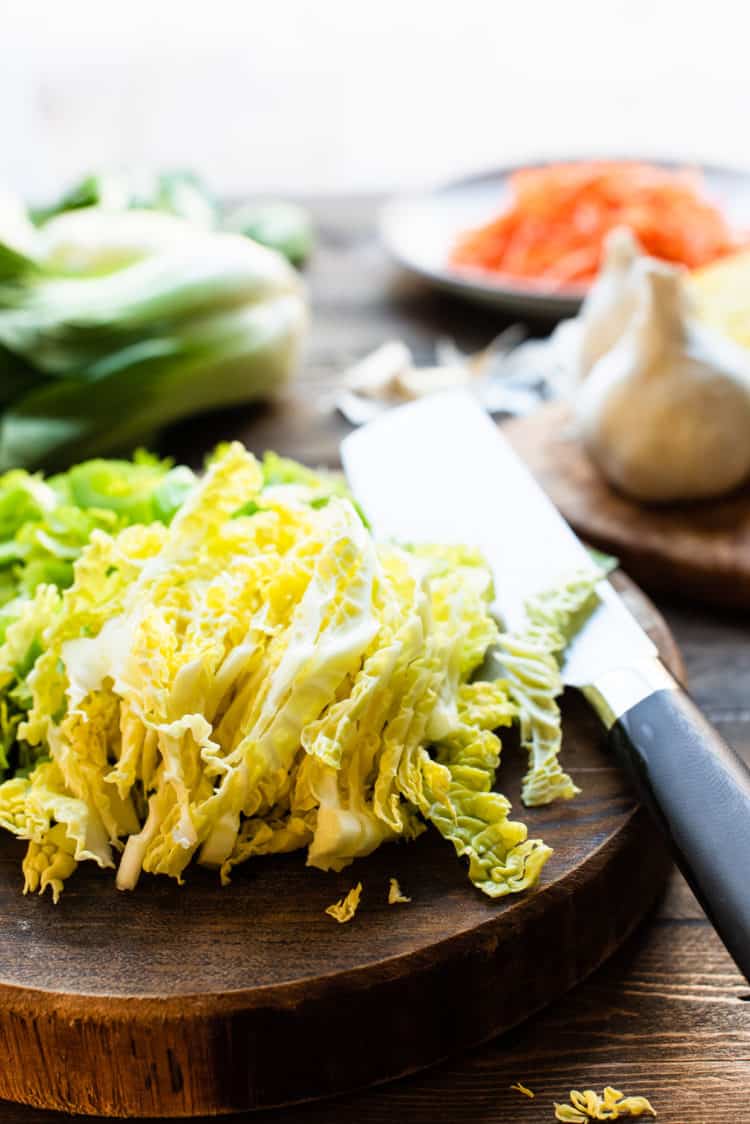
1cupcabbagethinly sliced
1cupbaby bok choy
1cupcarrots
1cupgreen beanssliced on the bias
1/2cupchopped celerysliced on a bias
2tablespoonsolive oil
1cupfinely chopped yellow onion
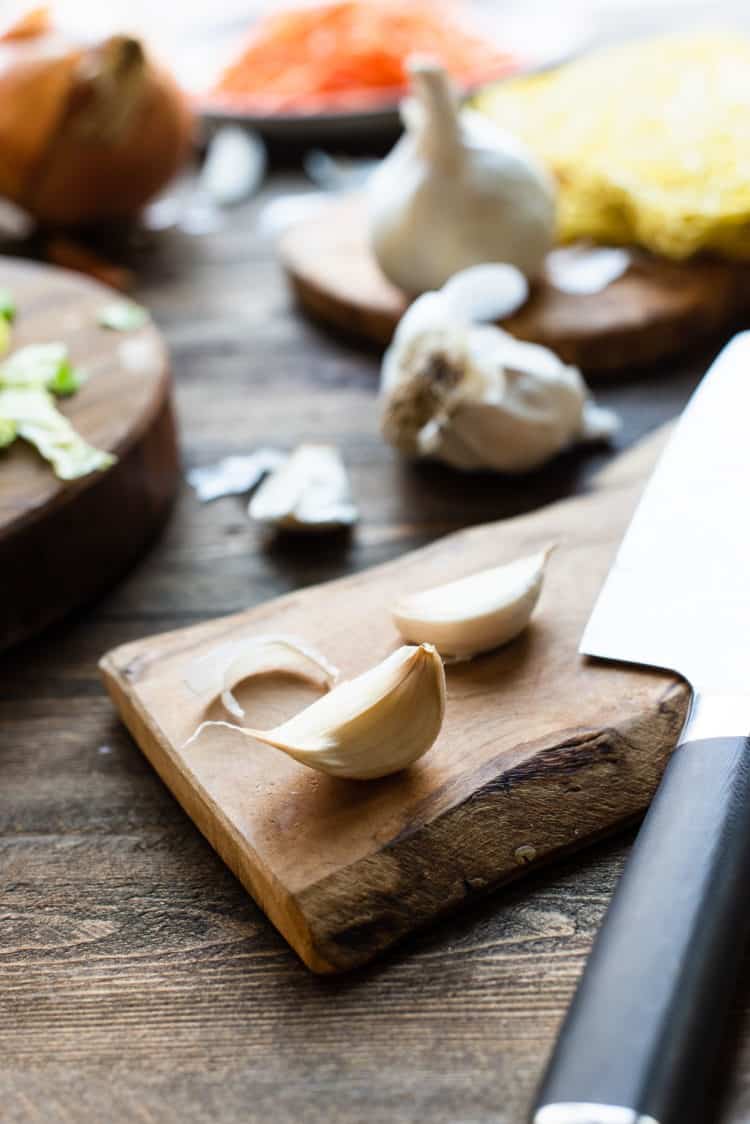
3teaspoonsminced garlic(2-3 cloves)
1/2poundshrimppeeled and deveined
1/2poundpork tenderloinsliced into thin, 2-inch pieces
Bring 5 cups of water in a pot to boil. As the water heats up, prepare an ice bath in a large bowl and a paper towel lined plate and set aside. Once the water comes to a boil, salt the water with about a tablespoon of salt and drop in the vegetables, blanching for about 1 minute. Use a slotted spoon to transfer the vegetables into the ice bath and let it sit for 2 minutes. When the vegetables are cool, drain the vegetables, place on the lined plate, and set aside.
Heat the olive oil in a wok over medium-low heat. When the oil is hot, add the onion and garlic, and cook for about 3 minutes, or until the onion is translucent.
Add the shrimp to the pan and let it cook for about a minute or until it just turns pink and it curls up. Using a slotted spoon, remove from the wok and set aside.
Add the pork, season lightly with salt and pepper, and cook for about 2 minutes, stirring periodically. Stir in the chicken broth, water, soy sauce and Worcestershire sauce and bring to a boil. Let it simmer for about 5 minutes.
Add the noodles into the wok, tossing the noodles as it absorbs the sauce. If you find that the noodles are too dry, add a little water if necessary. When the noodles are soft, stir in the reserved vegetables and shrimp, tossing to combine. Cook for about another minute more.
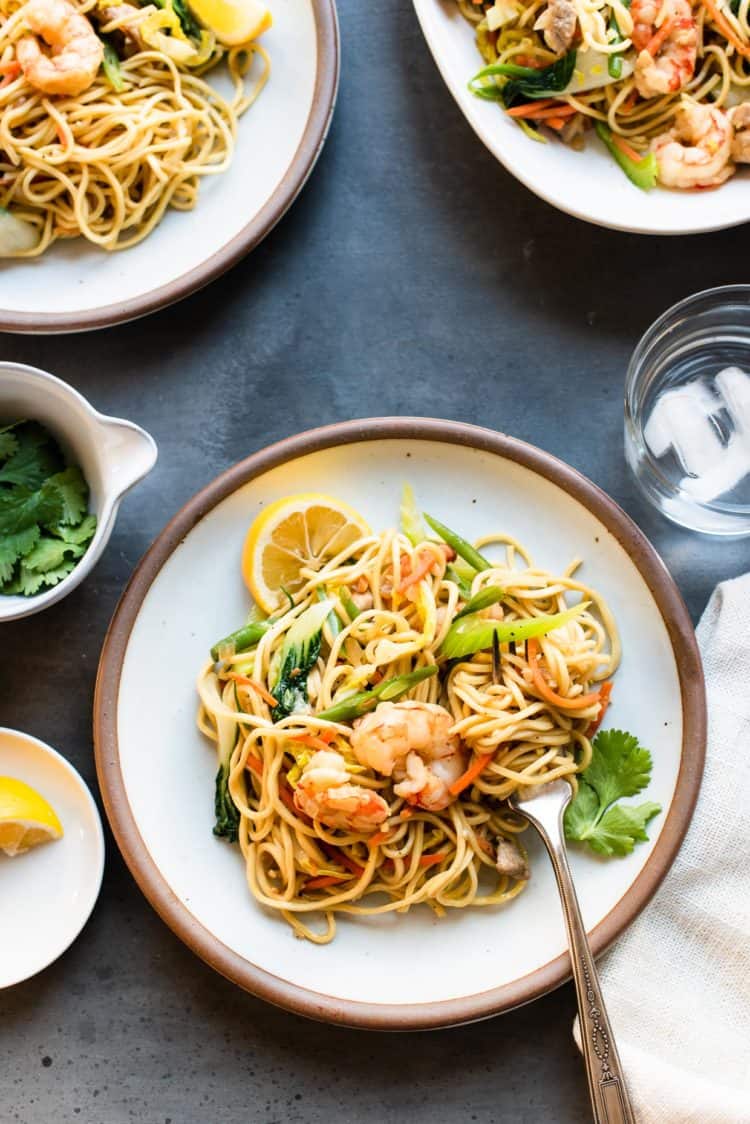
Transfer the pancit to a serving dish, garnish with cilantro. Serve immediately, with a squeeze of lemon juice to taste.
About This Recipe:
This is the Pancit Canton recipe I learned years ago from my Tita Tess when she cooked it for our Christmas family parties. Her version is more of a one-pot meal in that she begins the recipe at Step 2 and drops in the vegetables at the same time as the noodles in Step 5. I have since adopted the method of blanching the vegetables from Panlasang Pinoy, and like the crisp texture of the vegetables when adding this step, however, if you’re short on time or don’t feel like washing extra dishes, you can certainly do it Tita Tess’ way!
Noodles:
The type of noodles you use really makes a difference. If you can’t locate Pancit Canton noodles at your Asian Market (I like the Excellent brand, also available on Amazon), you can substitute spaghetti noodles. Lo mein or chow mein noodles can also be used, but do be careful and take time to pre-boil and drain the noodles first; some chow mein noodles have a tendency to get gummy and sticky, which is quite unpleasant in this dish!
Making Vegetarian Pancit Canton:
Pancit Canton can easily be translated as a vegetarian noodle dish. Omit the meat and substitute chicken broth for water or vegetable broth.
This post is sponsored by the American Pecan Council. I wish I could buy everyone a plane ticket to southern California this time of year. In terms of weather, pace of life, experiences, I love it all so much I wish I could give the coastline a big squeeze! There are cooler days in the fifties, mornings with fog, days with rain, and even more days with seventy degree sunshine. Throw in a few random eighty degree weekends with acai bowls, followed by chillier nights ending with warm bowls of soup – and it’s exactly the kind of randomness I crave week to week. Plus there are less people visiting, and the holiday craze is over so we can get back to bowls of raw veggies and plant burgers topped with avocado and sprouts. (I’m sorry holiday food, I see you, I loved you, and I’m over you.)
I decided there aren’t nearly enough veggie burgers on this site, and Scott agreed (my previous recipe from years ago is his favorite). I’m not sure why we don’t make them more often, they are so incredibly easy to throw together, and involve toppings, which is just exciting. I have yet to nail down a recipe using beans and grains, and end up focusing more on the veggie-heavy sort. Typically this is because the bean and grain patties always involve some kind of flour, and maybe I’m weird, but I don’t want flour in my burger. I’m already enjoying it with a bun, and would love if it was filled with a more nutrient dense ingredient than flour (oats included). This is when I thought to use nuts! Most importantly my favorite nut as of lately, pecans.
Pecans are so wonderful in savory foods, and we love them especially paired with wild rice. They contain a valuable package of protein, healthy fats and fiber, and a butter-y flavor and texture that is incredibly good in a veggie burger patty. As you know from my first post featuring pecans last month (these cookies) they are the only major tree nut indigenous to the United States – so neat! Nearly eighty percent of the world’s pecans are grown right here in America. And when I think of America, I think of burgers, so it’s time the two got together and made a delicious plant burger, right?
This recipe comes together in minutes. All you need to do ahead of time, with your weekly food prep, is to be sure to cook up a batch of wild rice and pop it in a container in the fridge, along with a jar of sunflower seeds in water to soak (for the sauce). Come dinner time during the week when you’re ready to make the burgers, you’ll only be thirty minutes away from prepping and cooking everything! And it’s an easy breezy thirty minutes, I promise.
I hope you enjoy this recipe if you give it a go! It tastes so much like California to me with the sprouts and avocado. If you do try, be sure to let me know what you think in the comments below. And a big thank you for your replies on my Instagram post inquiring about hurdles you feel as if you are facing when it comes to eating more plant-based this year too. I’m writing them all down and hoping to dive more into those topics, with helpful recipes as well, in the coming months. Know that I am rooting for you! – xx
This post was sponsored by the American Pecan Council. All words and opinions are my own, and I absolutely love pecans. Thank you for supporting Faring Well through your support if its sponsors.
WILD RICE PECAN BURGERS + CREAMY SUNFLOWER CHIVE SPREAD Makes 8 small burgers, or 4 servings.
wild rice pecan burgers 1 cup cooked wild rice mix 1 1/2 cups chickpeas 1 cup raw pecan halves 1/3 cup chopped yellow onion 3 minced (or pressed) garlic gloves 1/2 teaspoon sea salt (or to taste) 5 to 6 cranks of fresh black pepper 1/8 teaspoon cayenne 1 teaspoon low sodium tamari
creamy sunflower chive spread 3/4 cup hulled sunflower seeds 3 tablespoons chopped fresh chives 1 tablespoons fresh lemon juice 2 teaspoons apple cider vinegar 1/2 teaspoon sea salt, or to taste 3/4 cup filtered water
Ahead of time: cook up a portion of wild rice, and get the sunflower seeds soaking in water for at least 4 hours (can soak longer in a jar in the fridge, ie. several days).
Make the veggie burgers: combine all of the ingredients listed in the bowl of a food processor. Pulse 6 or 7 times. Then stop and scrape down the sides, giving it a stir. Pulse another 4 to 5 times, and it’s ready. You want it to be able to hold together, but still have bits and pieces left whole to give it texture.
Heat a ceramic nonstick skillet on the stove over medium-high heat (I use these Green Pans). If using a traditional skillet, add a little oil to keep the burgers from sticking.
Form 8 equally sized balls from the mixture and shape into patties about an inch thick. Place in the heated pan, and do not touch for 10 minutes. Check and make sure they have browned well before carefully flipping and cooking an additional 5 minutes to brown the other side too. Transfer to a plate for serving.
While the veggie burgers cook, make the spread. Rinse and drain the soaked sunflower seeds and add to a blender with the remaining sauce ingredients. Puree until smooth, then taste for seasoning. (Make adjustments with salt and lemon juice if needed.)
Now it’s time to build the burgers! Give a good schmear of spread on the inside of each bun half, and layer with a patty, sliced avocado, red onion, and sprouts. Enjoy right away! Any leftover cooked patties store well in an airtight glass container in the fridge for a few days (makes a delicious cold burger/sandwich for lunch).
I love seeing what you create! Be sure to tag your photos on Instagram with #FWmakers.
This post contains affiliate links (they are underlined for clarity). Purchases you make through these links will help fund the work I do here on Faring Well at no extra cost to you. Thank you sincerely for your constant love and support.
This post originally appeared on February 19, 2019, in “Add to Cart” — the weekly newsletter for people who love shopping (almost) as much as they love eating. Subscribe now.
Confession: I went out to eat at a restaurant last night. I also got takeout.
Dining out versus cooking at home is no longer a binary, but rather two ends of a very crowded spectrum. At one end, you can buy and cook your own food. But you can also have the ingredients shipped to you that you then cook (thanks for nothing, Blue Apron), have the ingredients pre-mixed for you and then cook them (ily, Daily Harvest), or have entire meals sent to you, ready to eat (please explain your mysteries to me, Sakara Life).
On the other end of the spectrum, you can go out — but you may have to order at a counter first, or assemble the meal yourself, Chipotle-style. Somewhere in the middle is a murky new reality in which delivery operations are housed within existing restaurants, meaning the IRL menu is totally different than the one you encounter online. There may even be several “virtual restaurants” living in one actual restaurant space, existing just for the sake of delivery.
And scrolling through Seamless can feel just like scrolling through Netflix — an overwhelming, aimless hunt with endless options that somehow always leads you back to the just-okay thing you already know. The paradox of choice has wormed its way into our dining habits.
So here’s a different, more delightful, dining tactic to throw into the mix: Go out to eat, enjoy a good restaurant meal, and when the server comes to clear your dishes, order an extra meal to go. You could gift it to an unsuspecting roommate or partner who didn’t get to join you on your dinner date, but better yet, save it for yourself. It’s a way to stretch the restaurant experience out, and one less meal to make a decision about. And you won’t pay a delivery fee.
Things to buy
Hot tip for mug lovers: West Elm, of all places, has a pretty great selection. These two-toned Clash mugs, which come in an oh-so-now palette of coral, teal, and Yves Klein blue, are my favorites. It doesn’t hurt that there’s a big West Elm sale today.
A totally plastic-free life is a tall order, but I’m into replacing disposable plastic plates with these eco-friendly plates from the Clear Conscience, made from fallen palm leaves. They’re way nicer-looking anyway.
The easiest way to impress guests: Make them a cocktail with mini ice balls using this ice tray, and tell them you picked up the idea while sipping drinks at the Aviary.
Things to know
When two trending phenomena collide: Direct-to-consumer kitchenware company Material, which makes minimalist knives and cooking utensils, has announced a partnership with Alison Roman, naming her a “Strategic Brand Advisor” to the brand.
Next time you covet a beautiful handmade plate or bowl from a restaurant, know that you have resources. Plenty of artists, including Robert Siegel Studio (pictured below) and Noble, list online which restaurants use their dishes. Other studios are getting wise to the fact that ceramics are replacing fine china as the tableware of choice for young couples: Heath Ceramics, Jono Pandolfi, and MMclay by Mary Mar Keenan allow shoppers to create wedding registries on their sites. (Yes, I still have wedding registries on my mind.)
Also, thanks to an intrepid reader (hi, Greg!), my question has been answered: WeWork’s in-house cucumber carving artists, aka the maintenance team, uses these alphabet cookie-cutter tools to cut the cucumber skin. And now I need them.
Vox Media has affiliate partnerships. These do not influence editorial content, though Vox Media may earn commissions for products purchased via affiliate links. For more information, see our ethics policy.
Sometimes, a small gesture is everything. Here’s the story of a touching decision by two paramedics that turned one man’s last ambulance ride into a sweet final journey. Ron McCartney, of Queensland, Australia, was dying of prostate cancer, and had barely eaten in days. In early September, his wife Sharon called the Queensland Ambulance Service to take Ron on his final journey to the hospital and then to palliative care. But when she told the paramedics how long it had been since Ron had eaten, paramedics Kate Hanafy and Hanna Hoswell decided to sweeten up his final ride.
“He was very low on energy and tired and lethargic, looking a bit down in the dumps,” Hoswell told Australia’s 9News. “Kate said, ‘Well, if we could get him anything, what would it be?’ And (Sharon and Ron) smiled at each other and said, ‘caramel sundae.’”
It wasn’t an easy road to that sundae. According to the Brisbane Times, the paramedics discovered their ambulance wouldn’t fit in the nearby McDonald’s drive-thru, so they parked the rig and went in to order the sundae and bring it to their patient.
“He was getting it all over his face, getting it all over his shirt, he had a big smile on his face and his wife was tearing up because she was so pleased to see him eating,” Hanafy told the Times.
McCartney’s daughter, Danielle Smith, said her father was diagnosed with prostate cancer in 2001. “He’ll never say no to a caramel sundae,” she told the Times.
The ambulance service used social media to share a photo of McCartney enjoying his treat, and it quickly went viral.
“Dad enjoyed this so much and (it) was the last thing he was able to eat by himself,” Smith wrote on the Facebook post. “Dad sadly passed away Saturday morning (just days after the sundae).”
The post inspired many others to reminisce about the final food treats their loved ones enjoyed during their last days, and the other small gestures that made slipping out of this world a tiny bit easier.
This kind of caring isn’t unusual for the Queensland Ambulance Service. In 2017, a patient wanted to see the ocean for the last time, so drivers brought her up to the shore and even scooped up some seawater for her to feel and taste.



 I first had this Southwest Black Bean Quinoa over Thanksgiving week a few years ago while I was visiting friends and family in the Midwest. My friend, Cara, introduced it to me. She told me how much she liked the flavors and I couldn’t wait to try it.
 Another way to serve this is as a bed to slices of grilled chicken with fruit on the side. This makes for a very healthy lunch or dinner, and you feel really good afterwards. Although, without the chicken, you can also enjoy this as a vegetarian meal. Lately, however, we have enjoyed as a base for taco bowls (or as a side to tacos) with my favorite